Early career support sparks new hope for Alzheimer’s diagnosis
23 September 2025
Dementia is a growing health challenge that affects more than 500,000 Canadians. Alzheimer’s disease, the most common form, often begins silently. Changes in the brain start a decade or more before symptoms appear.
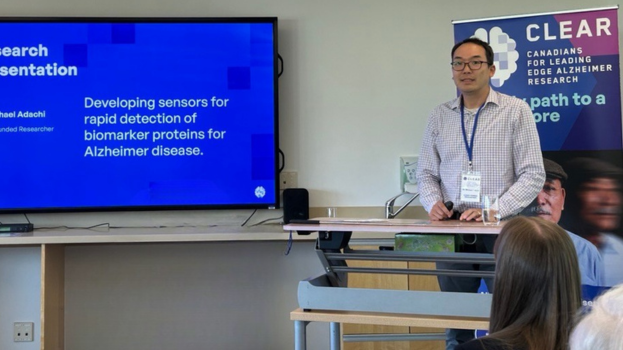
For Dr. Michael Adachi, a researcher at Simon Fraser University, finding a way to detect those changes early is both a scientific challenge and a personal mission.
“My father had dementia, and that’s one of the reasons I was drawn to this work,” says Michael.
Michael’s research background is in nanomaterials — incredibly small structures — which he first applied in the energy field. Receiving the Michael Smith Health Research BC Scholar award, in partnership with CLEAR Foundation, was the turning point that helped him shift into health research.
“The partnered funding has had a significant impact on my research program by allowing me to focus more of my time on health-related projects,” says Michael. “It helped me build momentum, secure complementary grants, and grow collaborations with dementia researchers in BC.”
Michael’s focus is biomarkers.
Biomakers are measurable characteristics found in blood, tissue, or other fluids that show a person’s health status. They can indicate whether someone has a disease, is at risk of developing it, or is responding to treatment. For Alzheimer’s disease, certain proteins from the brain act as biomarkers. But current ways of detecting these biomarkers can be uncomfortable, painful, costly, and slow — often needing special procedures or special lab equipment.
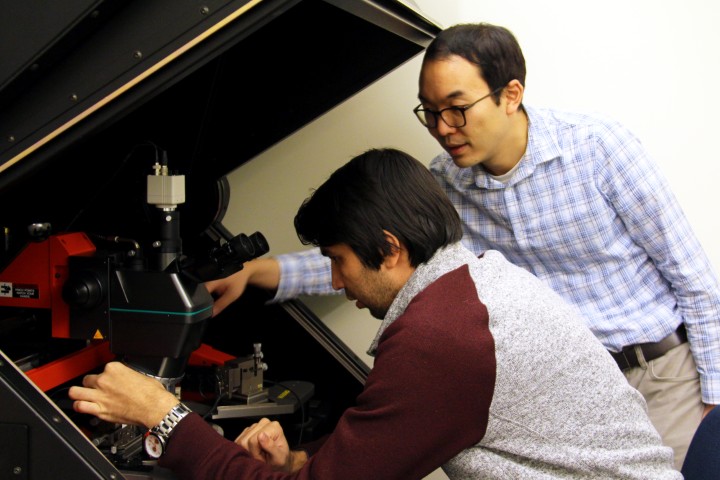
Michael and his team are developing a sensor to detect Alzheimer’s biomarkers through a simple blood test. The sensor is tiny — no larger than the tip of a pin — and built on a silicon chip. Its small size and high sensitivity mean that it can detect biomarkers in very small blood samples.
The team is now studying how well the sensor can detect the biomarkers. Their next steps are to validate the technology and prepare it for testing in clinical settings, such as with family doctors.
“Our goal is to make screening easier, faster, and more widely available in everyday clinical settings,” says Michael. “We want to translate our research from the lab to a product that makes a difference for Canadians.”
Michael’s research has the potential to reshape Alzheimer’s care — offering quicker diagnosis, earlier interventions, and better outcomes for patients and families affected by the disease.
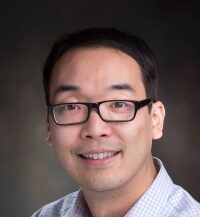 |
Dr. Michael Adachi is an Associate Professor in the School of Engineering Science in the Faculty of Applied Sciences at Simon Fraser University.
He is supported by Health Research BC through a Scholar award, in partnership with CLEAR Foundation. |
Learn more
Explore our funding programs and partnership opportunities.
Learn more about CLEAR Foundation.
Stay informed
Subscribe to our newsletter and follow us on LinkedIn.