Investing in people who drive change
24 September 2025
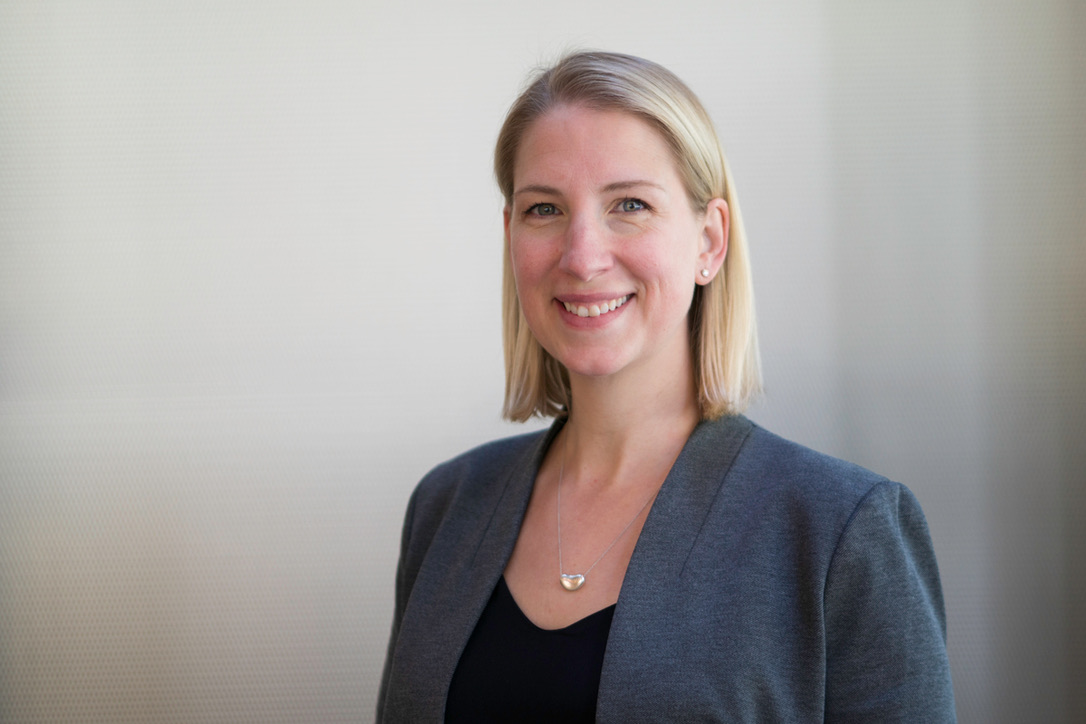
For Dr. Leah Lambert, a clinical nurse scientist at BC Cancer, improving cancer care isn’t only a professional goal — it’s also personal.
“My brother was diagnosed with a rare cancer called metastatic liposarcoma at 29. His initial prognosis was poor,” says Leah. “But a team at BC Cancer provided exceptional care. Seventeen years later, he’s alive and doing well.”
She wants the kind of world-class, patient-centred care that her brother received to be accessible to everyone — no matter a patient’s background, income, or postal code.
“Care can be influenced by barriers like geography, income, language, gender, and housing status,” says Leah. “But care needs to be responsive to the contexts people live in. It’s never just about eliminating cancer cells.”
Leah works at the intersection of care, research, and operations. She’s helping to reshape cancer care to be more safe, compassionate, and responsive. She partners with people facing health and social inequities — whose voices are often left out of care — as well as clinicians and community organizations to identify and address gaps that create unfair barriers.
For example, Leah and her team collaborated with care providers working in shelters, outreach clinics, and drop-in spaces in Vancouver’s Downtown Eastside. She says spending time in the community gave cancer clinicians and researchers a clearer picture of what it takes to meet people where they are.
“Equity-oriented practice is central to care in those settings,” says Leah. “The providers have deep experience supporting people navigating marginalization and trauma. They deliver care in ways that are flexible, respectful, and grounded in trust.”
Early support builds careers
Michael Smith Health Research BC supported Leah early in her career. Through the Health System Impact Fellowship, in partnership with the Canadian Institutes of Health Research (CIHR), Leah became the first nurse researcher placed within BC Cancer, the organization responsible for delivering cancer care for people in BC.
Immersed in BC Cancer’s environment during her fellowship, she gained first-hand experience seeing how clinical, operational, and policy decisions shaped cancer care.
“It helped me understand what influences how the cancer care system works and how research could be used to address complex, real-world clinical and system-level challenges,” Leah says.
The fellowship strengthened her commitment to equity-focused research that informs care directly. It also laid the foundation for her to step into a senior scientific role at BC Cancer.
“Support from Health Research BC was a game changer,” says Leah. “It enabled me to work inside the system — not alongside it — and make my research more relevant. It also accelerated my career and allowed me to stay in BC to build a program of nursing-led research that drives real change.”
Local and global impact
With continued support from Health Research BC and partners, Leah leads initiatives influencing cancer care policy and practice across the province and Canada.
She believes the path to meaningful changes in care delivery begins with supporting nurses.
“Nurses are often the first to recognize when care isn’t equitable or culturally safe,” she says. “But if they’re overstretched or lack the time, training, and tools to navigate those situations, those insights are lost.”
Leah is co-leading a CIHR-funded initiative to strengthen and better support clinical nurse specialists (CNS) — nurses who have the expertise to meet complex patient needs and who play a critical role in cancer care.
Her team developed recommendations for standard job descriptions, training, evaluation, and formal recognition of the role. These changes are now being adopted across all health authorities in BC.
The CNS workforce initiative has drawn national attention from a Health Canada task force working to address nursing workforce challenges. It’s also serving as a reference point for other provinces, with international interest, too.
“What began as a BC-based initiative is now informing policy across Canada and sparking conversations abroad,” says Leah.
Creating lasting change
Leah’s work shows the value of investing in research talent that grows within BC and creates lasting change.
“We’re making a tangible difference in workforce policy, in the health system, and in patient experience,” she says. “That was possible because there was space and support for clinical nurse scientists to do this kind of work in partnership with health system leaders.”
| Dr. Leah Lambert is Senior Scientist at BC Cancer and Clinical Associate Professor in the School of Nursing at the University of British Columbia.
Leah is supported by Health Research BC through a Reach award in partnership with the BC Nurses’ Union and a Scholar award in partnership with the BC Cancer Foundation. She was previously supported through a CIHR Health System Fellowship, co-funded by Health Research BC. |
Learn more
Learn more about our funding programs and partnership opportunities.
Stay informed
Subscribe to our newsletter and follow us on LinkedIn.