Rooted in respect: A story of strength, systems change, and sovereignty
22 July 2025
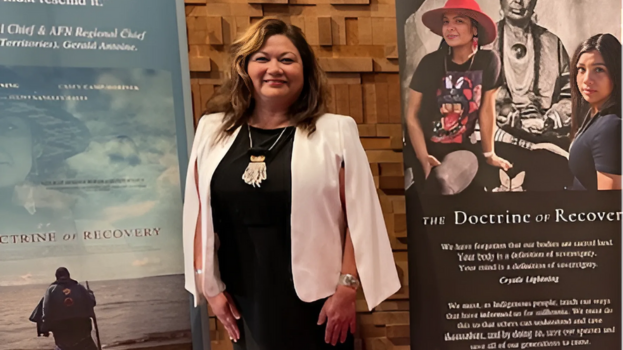
Namaste Marsden, Masemtxoxw, has built a life around protecting and lifting Indigenous voices. A mother, scholar, lawyer, and Indigenous health leader, she works to transform the systems that have long ignored or silenced those voices.
Namaste remembers what it felt like to grow up in a place largely untouched by colonialism. She is Gitanyow, belonging to the Wilp Gamlaxyeltxw of Lax Ganeda (Frog Clan). Deep in the Nation’s territory, her people’s traditional systems remained strong. European settlers didn’t arrive until the 1900s. She recalls being told that her grandfather — late hereditary chief Solomon Marsden, Gamlaxyeltxw — was 17 when he saw the first settler arrive.
“There’s an incredible love for children in our culture,” reflects Namaste, who’s also a niece and an aunty. “And a deep respect — for Elders, for our oral histories, for animals, for water, for each other.”
These values weren’t taught in a classroom. They were lived. Children learned to sit quietly and listen. Words were few but powerful.
“Our values are rooted in everything we do. We have responsibilities — not just to our families but to our communities and to society,” she says. “That’s what drives me.”
Reshaping systems for Indigenous voices
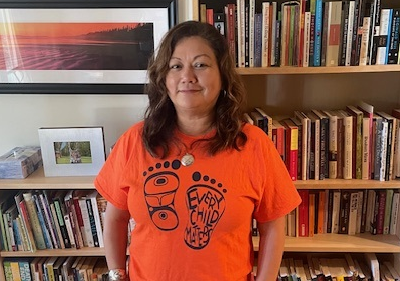
From the beginning of her career, Namaste’s goal was clear: ensure Indigenous voices are not only heard but truly centred. She has fought for system changes that protect space for those voices — unfiltered and intact. Today, her work goes even deeper, challenging the structures that prevent those voices from being heard in the first place.
Respect, relationship, and responsibility are at the heart of everything she does — from advancing First Nations rights and governance to reshaping the health research system.
Namaste points out that there isn’t any funding for knowledge translation grounded in Indigenous worldviews. The former National Aboriginal Health Organization once managed an Indigenous health journal — the first of its kind — but the organization was dissolved over a decade ago after federal budget cuts.
Namaste couldn’t let the journal disappear.
She stepped in to save it — without funding. Along with support from a new editor and editorial board, Namaste redesigned the journal to reflect Indigenous values: ethical engagement, collective authorship, contextual understanding, and open access. She also expanded its scope internationally. Titled International Journal of Indigenous Health, it continues to make a lasting impact.
Bridging worldviews: from deficit to strength
| Whether leading policy conversations or guiding future health professionals, Namaste brings forward the calm, consensus-driven values of her ancestors. But working within systems shaped by colonial ideas hasn’t felt natural.
“When I entered academia, I saw the disconnect,” she says. “You’re trained to compete and break things down to prove a point. But our way is to bring knowledge together and understand how it connects to the whole.” This clash between perspectives is a recurring challenge in Indigenous health research. Western science often zeroes in on what’s wrong — highlighting disease and risk — while ignoring culture, strength, and community-defined ideas of wellbeing. The medical system, she adds, often prioritizes treatment over holistic, preventative care. “The Western model says: identify the problem, design a solution,” says Namaste. “But our science is grounded in thousands of years of observation and understanding — through relationships with the land, with animals, with each other. That’s where real knowledge lives.” Namaste knows the current system isn’t working. Health data still focuses on negative outcomes like disease and early death, offering a narrow view that ignores the realities of Indigenous Peoples. |
Two approaches to Indigenous healthA deficit-based approach focuses on what’s wrong with an individual — like illness rates or negative outcomes — often comparing Indigenous Peoples to others to emphasize disparities. It can reinforce harmful stereotypes, ignore root causes like colonization and racism, and overlook Indigenous knowledge and strengths. This way of thinking frames Indigenous health as a problem needing outside solutions. A strength-based approach identifies and promotes what’s strong — like knowledge, traditions, resilience, and community connections. It supports Indigenous self-determination and sees culture, relationships, and traditional practices as central to health. Instead of focusing on problems, it builds on what’s already working to improve wellbeing. |
“That’s not a measure of who we are — it’s a measure of colonization,” she says. “It doesn’t reflect our strength, our health, or our ability to reclaim wellness.”
She emphasizes Indigenous health research and health systems must shift to a strength-based model — one that challenges racism, rejects deficit thinking, and uplifts Indigenous knowledge and leadership.
“We need our own data, our own indicators, our own ways of tracking what matters,” she says. “Western models weren’t made for us — they won’t carry us forward.”
By co-creating health indicators rooted in culture, community, and connection, Indigenous Peoples can change the narrative, grow capacity, and shape more just systems.
The way forward through connection
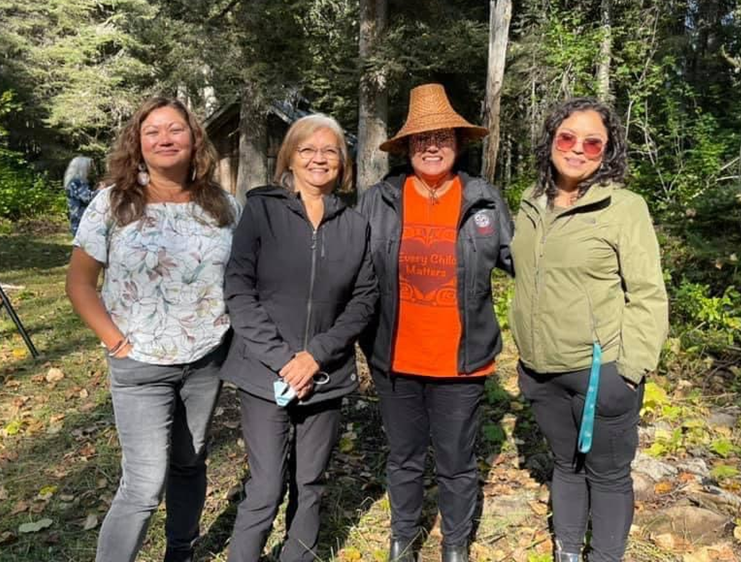
For Namaste, real change starts with relationships — with showing up, listening deeply, and being honest about who you are in the work. It’s about doing the work with care, not control — and making space for different ways of knowing.
“We don’t do this work to be objective — we do it to inspire change,” she says. “That starts by asking: Who am I in this work? What am I bringing to it? Without that understanding, we can’t build trust. The heart of this work is connection — knowing ourselves and showing up with integrity.”
A strengths-based approach recognizes Indigenous Peoples as experts in their own health and wellbeing. It centres on relationships, cultural knowledge, and the root causes of inequity. And while there’s still a long road ahead, Namaste believes it’s important to recognize and protect the good work that is happening.
“We need to celebrate the people and projects getting it right — and keep making space for more people to challenge the old ways of thinking.”
Explore the Indigenous context further
- Nothing about us without us in writing: aligning the editorial policies of the Canadian Journal of Public Health with the inherent rights of Indigenous Peoples
- Canadian Journal of Public Health adopts requirement for meaningful engagement of First Nations, Inuit, Métis, and Indigenous Peoples
- International Journal of Indigenous Health
|
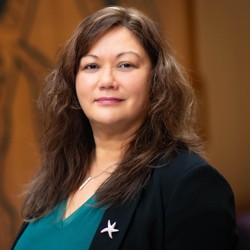
Namaste Marsden, Masemtxoxw, is from Wilp Gamlaxyeltxw of Lax Ganeda (Frog Clan) from Gitanyow Nation. As Dax’gyet Director with Gitanyow Hereditary Chiefs, she is leading projects that restore the nation’s hereditary governance system. Namaste has more than 20 years of experience working with First Nations and Indigenous organizations and programs at community, nation, provincial, national, and international levels. Her expertise includes First Nations rights and title, governance, Indigenous-led research and evaluation, data sovereignty, and policy development and implementation. Namaste is a member of the Indigenous Advisory Committee in the BC Office of Patient Centred Measurement, an adjunct professor in the Faculty of Health Sciences at Simon Fraser University, member of Michael Smith Health Research BC’s Board of Directors, and a past co-chair of Research Ethics BC’s Advisory Council.
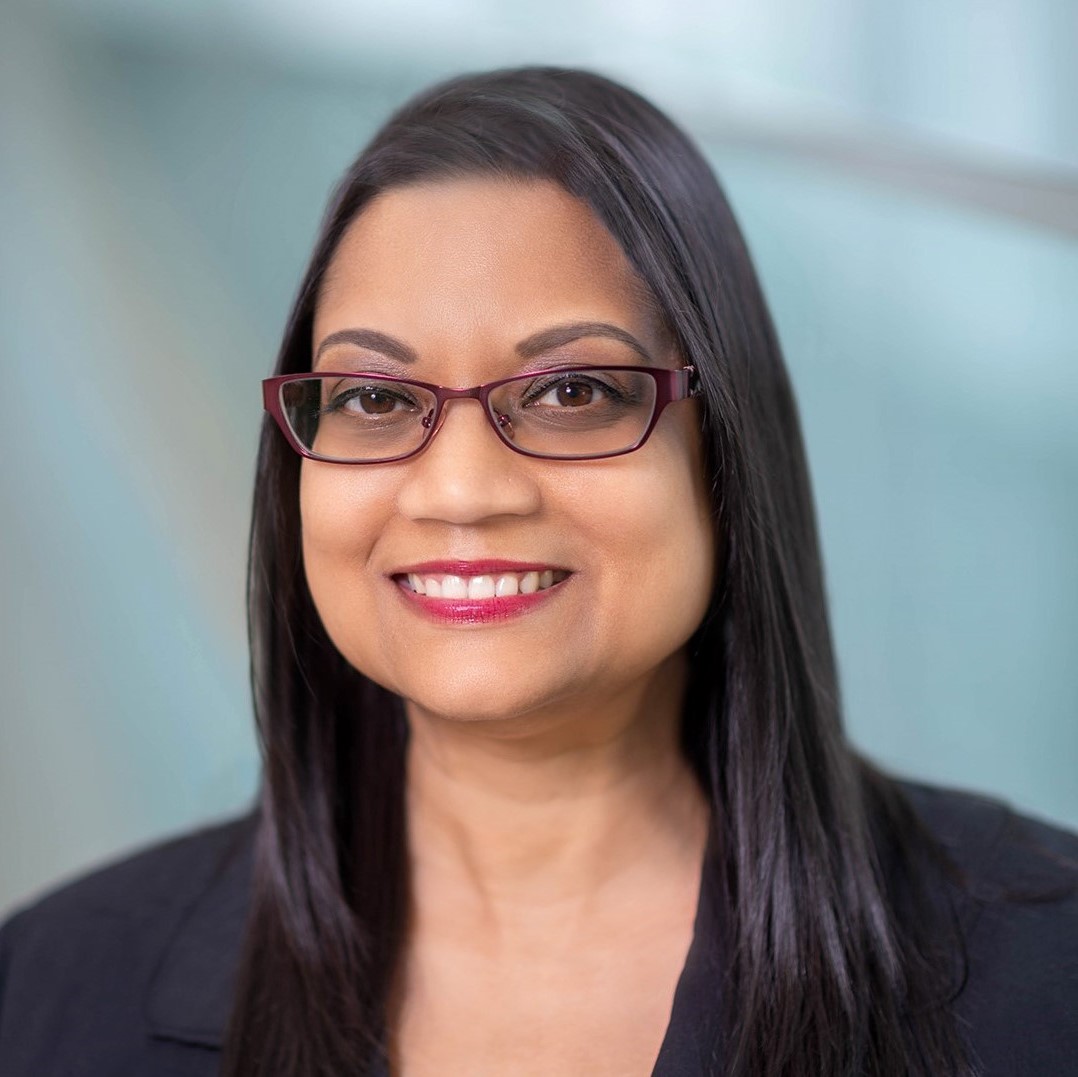
Lubna Ekramoddoullah worked with Namaste to bring her story to life. Lubna was born to settler parents from Bangladesh on Treaty No. 1 Territory, the traditional lands of the Anishinaabe (Ojibway), Ininew (Cree), Oji-Cree, Dene, and Dakota. She is on the communications team at Michael Smith Health Research BC, working on the unceded, ancestral, and traditional lands of the xʷməθkʷəy̓əm (Musqueam), Sḵwx̱wú7mesh (Squamish), and səlilwətaɬ (Tsleil-Waututh) Nations. Lubna’s heart is strongly connected to the land, water, sun, air, plants, and animals. With a passion for storytelling, she advocates for equity by amplifying voices that are often overlooked, working to make meaningful, lasting change. Namaste and Lubna collaborated on this story on the ancestral and unceded lands of the Coast Salish and were guided by Coast Salish teachings from Knowledge Keeper, Sulksun (Shane Pointe). Learn about the protocols of the First Nations lands where you live, work, and play. |
Health Research BC’s commitment to Indigenous research
Health Research BC acknowledges that colonization and systemic racism have critically impacted the past and ongoing health and wellbeing of First Nations, Métis, and Inuit Peoples.
We envision a health research system that is culturally safe, values Indigenous ways of knowing, and respects the rights of First Nations, Métis, and Inuit Peoples.
We are committed to advancing Indigenous reconciliation across all areas of our work.
Our commitments are an active and ongoing process, like reconciliation itself. We know that progress will depend on strong relationships based upon trust and respect — and that those relationships will take time to develop. As we continue this journey, we look forward to learning, working in partnership with Indigenous Peoples and organizations, and holding ourselves accountable for this work.
Learn more about our commitments to Indigenous reconciliation.
Stay informed
Subscribe to our newsletter and follow us on LinkedIn.